I’m frequently asked what are the best books for starting mediation. I have settled on a short list of resources. Two of them are listed here:
The Calm Technique: Meditation Without Magic or Mysticism – Australian Paul Wilson came out with this book some time ago but it remains one of my favorites because it is so clear, simple, and precise in its introduction to breathing and mantra meditation. You will find this highly valuable book priced from 1 cent to about 2 bucks. Amazon link
Unplug for an Hour, a Day, or a Weekend: Create a Home Sanctuary with 32 Contemplation Cards, Companion Guidebook, 2 CDs of Guided Meditations is a complete look at mindfulness meditation. It comes in a fun format of: a booklet, two CDs, and “contemplation cards”. Perhaps I’m a sucker for this sort of packaging but it helps make the whole thing feel like an all encompassing experience. At any rate, this box of meditation is grossly under priced ($10) given what Sharon Salzberg includes in her instruction. Amazon link
Photos of smiling nuns taken when they came into religious service when they were in their early 20s, reveal which will live the longest. The right type of smile, wrong type of smile, it makes a difference.
While conducting research on the physiology of facial expressions in the mid-19th century, french physician Guillaume Duchenne identified two distinct types of smiles. A “Duchenne smile” involves contraction of both the zygomatic major muscle (which raises the corners of the mouth) and the orbicularis oculi muscle (which raises the cheeks and forms crow’s feet around the eyes). A non-Duchenne smile involves only the zygomatic major muscle. Many researchers believe that Duchenne smiles indicate genuine spontaneous emotions since most people cannot voluntarily contract the outer portion of the orbicularis oculi muscle. The young women who were fated to be long-living and healthier nuns, wore the Duchenne smiles in their entry photos.
Fake smiles, on the other hand point a person in the direction of greater stress and greater illness. “A study of city bus drivers led by a Michigan State University business scholar found that the drivers who fake smiles at work worsen their mood throughout their day, which in turn affects their productivity. The problem is that smiling for the sake of smiling can lead to emotional exhaustion and withdrawal. Women were hurt more than men by the fake smiles, which the researchers attribute to the fact that women are both expected to and do show greater emotional intensity and expressiveness than men.” Link to article
Meditation masters have picked up on the power of the smile. Buddhist, Thich Nhat Hanh makes a simple smile part of his basic mindfulness practice (link to article) Modern Taoist and teacher, Mantak Chia carries smiling instruction further by having us smile to the many parts of our body using an actual smile and our mind’s eye. Each part gets a smile and the opportunity to bath in good will and relaxation. Link to article on Chia’s methodsLink to Chia’s book, The Inner Smile
This is an instant stress reduction technique in that it can be brought out, anywhere, anytime and–if practiced–will bring stress levels down very quickly. Stress comes down, but not to zero but to a level where you will have more wiggle room.
There are two secrets to this technique. First, it goes completely opposite of what your body and mind has been created to do when you are under a little or a lot of stress. Stress involves a narrowing of our focus. Our work shrinks down to what is of greatest interest to us at the moment. That can be worry, jumping out of the way of a bus, or trying to decide: “Do I flee, fight, or freeze?”
If you are jumping out of the way of a bus there is little you can do to control your stress narrowing of the mind. Nor would you want to! You are on a mission to save your life. If you are in less dire situations such as about to go into a job interview/review or are caught in the web of worry, then this is a good time to take your mind in the opposite direction. Widening your focus, even for a few moments, will have an impact. Your attention will open up and your mind will open up. Then you might see a new way, or you might be able to catch your breath which will give you a chance to ground yourself in the moment and in your personal values.
The Technique
Right now, stop reading and expand your awareness to the space around you. You can either listen to or see actual things in the space or you can use your memory to flit from one point in the room and then to another and to another. This latter approach, gives you a sense of how big the space is. As you bring up memories to various points in the room such as the lamp in the corner behind you, the desk across the room, the doorway to the left, and the ceiling, your mind throws in details such as distance from you to these objects. This provides an approximation of the size of the space.
Hold that awareness for a few seconds or longer if you can. How do you feel? Your narrowed stress focus will be tugging at you to go back to where it was but just keep working the technique. Eventually, you probably will hit a balance of narrowed focus and Go Wide Focus.
You can go even wider if you have the chance. Think of a larger area just outside, perhaps the building, or the block. Or really open things up and think of the size of the sky. Anything to break you from the fixation of your stress-induced narrowed focus.
Look for a preferred way of doing this. You might find getting a fix on your immediate surroundings is the more powerful and effective way to go. Others will prefer very grand vistas (either visible or in the mind’s eye). Find yours.
Of course, you can flit between being in the narrowed focus to the Going Wide Focus and back again. You will not lose track with what’s going on around you or what you are there to do. What you will appreciate is the sudden easing of the stress so you can think and feel a bit more freely and be ready to explore new options when they pop up in your mind or appear before you.
Found Additional Resources:
Big Sky Meditation with Bells – Spirit Rock/Dharma Seed recording for streaming and downloading – go to Website – This presenter uses the Going Wide Focus technique and applies it to a meditation retreat surrounding for an extended time period.
“To invent, you need a good imagination and a pile of junk.”
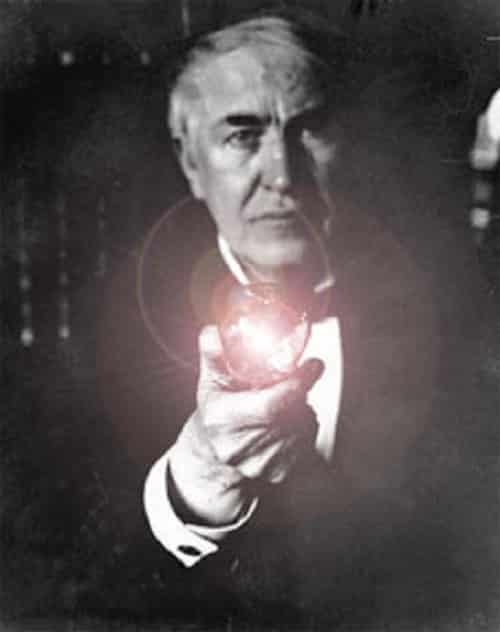
Edison worked his tail off every day searching for market-worthy inventions. One of the areas of his research included how to maximize his productivity and his thinking. One way to accomplish both was to nap: “I enjoy working about 18 hours a day. Besides the short catnaps I take each day, I average about four to five hours of sleep per night,” stated Edison.
During some of his nap sessions he did more than recharge his internal batteries, he used his imagination to work on creative problems. Working naps required sitting upright in a chair. Sitting up made it harder for him to fully sleep and made it possible to stay lightly conscious during these sessions. To further assure that he would not lapse into sleep, he would hold a steel ball bearing in each hand. On the floor, placed directly below his closed hand would be a metal saucer. If he should fall completely asleep, his hands would relax and each ball bearing would fall to the floor, striking the metal saucer, making a noise loud enough to wake Edison.
What was he doing? Edison was utilizing what was named hypnagogia. Hypnagogia is the state (actually a variety of states) that can be experienced as we hang onto consciousness while moving towards sleep. It involves bodily relaxation and the easing of the grip of cognitive/emotive focus. In hypnagogia we get the benefit of a sort of emotional and cognitive wandering. This wandering can be gently guided, as Edison did, or left open to go where it wants to go. Guided wandering has the benefit of keeping a topic of our interest in mind so we can observe it from new angles to learn new things. Edison meant business by setting up conditions so he could stay in this state for long periods.
Instead of steel balls Edison’s approach works perfectly fine but here are two more ways which don’t require steel balls.
Approach 1 – Lie down on a bed, on your back and rest your upper arm (from shoulder to elbow) elbow flat on the bed. Bend your elbow and keep your lower arm (from your elbow to your finger tips) pointed straight up to the ceiling. When you fall asleep, your arm will flop down on the bed and catch your attention. Wake up a bit and then cost back to hypnagogic wandering.
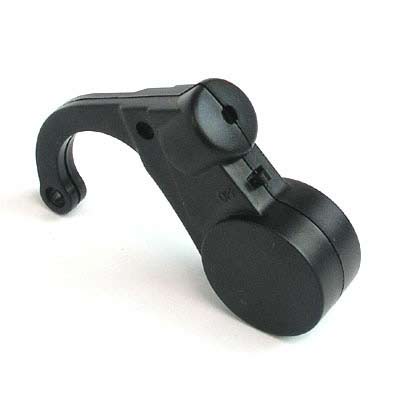
Approach 2 – Use a slightly modified wake-up alarm – Get a car doze-alerting alarm for a few dollars (see www.napzapper.com). Cover over the little speaker that screams an alarm when it detects the downward flop of the head of dozing off. This will make the sound tolerable since you don’t need it screaming, just making enough noise to wake you up. Put the device over your ear and sit up in a chair like Edison. Keep your head level. Relax physically and mentally and let your mind wander.
What you will discover In hypnagogia everything can swirl together—visions, thoughts, feelings, physical sensations, and who knows what else. There will be so much going on that you can’t possibly remember it all so you will need some way to remember what is most important to you. Try making some notes during the process or shortly after you end the session. Use notes on paper or on a recorder.
All of this takes practice, but you will be shocked how quickly you can master entry into hypnagogia. Pleasant and fruitful wandering await you.
Guided imagery is a great pleasure, especially when it is done right. But things can turn sour if we don’t pick the right recording for our needs and our tastes. A very tricky business unless we know how to decrease the misses and increase the odds of getting the right recording. Here is a list of things to look for you when you go shopping.
What Do You Want To Do? Every recording has an objective. It can be basic relaxation or something as complex as mind/body medicine, past life regression or other deeper challenges. The basic element across all recordings is verbal guidance used to get your unconscious and regular consciousness to follow instructions.
It is best to start off with a basic relaxation recording rather than jumping into deep waters first time out. You will need to know how to calm down and go inside before you can do the other more complex work. Starting off with a good relaxation recording will ease you into the whole guided imagery process.
Once you have relaxation within your grasp, track down specialized recordings if you have a special goal in mind. Look at the big bookstore and music websites but also cast your net wider by plugging your wants into a search engine. There are many great recordings out there that don’t appear at the major sites because some guided imagery artists only sell from their own websites.
Script Style – Highly Guided or Open-Ended Each guided imagery artist has many choices to make in terms of scripting a recording. Some scripts focus on providing very precise suggestions as to what images the artist wants you to bring to mind and carefully lays out what you are to do with them once they appear. Other scripting will be more loose, such as: “See yourself in a meadow. Look around and note what you see.” This is very open-ended. Open-ended scripting assumes that the listener has had some experience with guided imagery and holds a skill/comfort level that lets them fill in the details of the inner work as they wish. Newcomers, on the other hand, are generally more comfortable with detailed imagery targets and suggestions. Determine which type of script is best for you and your goals and try your best to find a match out there in the CD and mp3 world by sampling recordings where you can (i.e. iTunes or Amazon).
Script Symbols Scripting can differ in terms of what images a guided imagery artist uses. Some recordings keep things simple, such as “relax near a stream” or “open your heart and let go.” Other scripts will adopt imagery and terminology from some tradition such as the Tarot, yoga, Buddhism, or Kabbalah. This can be a very powerful experience if you are well versed in what each symbol means and have personally connected with the tradition from which it is taken. But if you don’t know what the artist is talking about or is trying to get to, you probably will have a frustrating experience. For instance, if you don’t know what chakras of yoga are or have never picked up the Tarot, scripting using these symbols will be lost on you. Read each recording description well to determine what symbolic language the artist might be working with. Consider if their symbols will work with your interests and goals.
Voice, Use of Voice, and Music The wrong voice is a killer. Everything else can be just right but without the proper guiding vocals the recording is junk. The only way to avoid making a bad purchase is work hard to find samples of the recording by taping into the samples at iTunes, Amazon, and CDBaby. How does the voice sound? Is it such that you can let go and ignore it? Trust it? Prefer a man’s voice? A woman’s voice?
How the speaker uses their voice is also important. Some artists speak almost in a plain, simple, conversational way. Others use their voice almost like a musical instrument, adapting their voice to convey the sort of actions they want you to do. Examples: pitching their voice up when they want you to ascend a staircase or dropping the volume of their voice when they want your body to feel heavy. What do you prefer, plain and simple or with a little or lot of drama?
Lastly, consider a recording’s background music. Most recordings come with some sort of musical background (some also use sound effects) so listen to see if the music choice works for you by finding and listening to samples.
Too Fast or Just Right? Closely related to voice, is timing. An extremely common mistake made by new guided imagery artists is moving too darn fast. Instructions come flying at the listener one after another with no time to get what the artist is asking or time to settle into an experience. Guided imagery takes time. The best guided imagery artists are those who have been led by many other artists and have developed a real feel of “inner world speed” versus our day-to-day outer world speed. The two speeds are very different. Again, track down some samples and get a sense if the imagery artist takes time to let you, the listener, work with what comes up.
Length You may prefer a compilation of short experiences or a longer break. Consider how you want to use the recording: quick 10 minute dips into imagination or do you really want to unplug and go for a guided journey? Consider getting both types, one for quick but regular imagination work and one for when you have plenty of time to go in deep. Read recording descriptions for this information on length.
Evidence-Based or Adopted by Institutions Unfortunately no one has put guided imagery recordings side-by-side and tested their effectiveness. Studies have been done over the years to see if guided imagery works in medicine and if guided imagery is superior to listening to music alone or with just resting. Yes, guided imagery has performed well in the studies and there are many indications that guided imagery works better than resting or music without guidance.
A handful of recordings have been used at least once or maybe a few times in multiple medical research studies. In a later post, I will offer a listing of where to find these particular recordings and reference the studies in which they were used with the findings noted.
Some institutions such as major hospitals and clinics have produced audio and video recordings that they pass onto their patients. The Mayo Clinic produced two CDs a few years back that were excellent but they are out-of-print now. Several universities have recordings available online covering a wide range of relaxation and imagery topics for students, staff, and patients. Those recordings are waiting online for anyone to download free. If you prefer to pick recordings based upon this criteria, use a search engine. Include the search terms: hospital, clinic, and university along with terms that describe the sort of recording you are hunting for. In a later post, I will provide a list of recordings available from the hospitals/clinics and educational institutions with links on how to obtain them.
Special Background Beats, Whisperings, and Subliminal Suggestions In addition to the spoken word and music, some recordings include special background beats, whispers, or subliminal suggestions. The thinking is that these methods will take a person deeper, faster, and more productively than a recording without these enhancements. There is some evidence that enhanced backgrounds can be helpful but further research is required to determine if they are always helpful and by how much. It doesn’t hurt to try these sort of recordings but plain recordings with the right words, right music, and right goals will do just fine. Again, I promise to write a post later on these sorts of recordings.
Breathing steps forward again and gives us the way out of stress and access to our the power of relaxation. Most days our rate of breathing, measured by breaths per minute, is somewhere between 12 to 18 bpm. A nice pace that keeps our breathing shallow and our mind zipping along.
If we want to get to a more relaxed place, we need to get bpm down to a maximum of 10. According to studies, keeping our breathing at no more than 10 bpm for about 15 minutes twice a day kicks in changes to bring many people’s blood pressure into the desired healthy range and can retrain the body to keep pressure down. Bringing the breath rate down reduces the stress response that gets our body to release smooth muscle tension that can clamp down on our blood vessels, raising blood pressure.
That’s one benefit. If we can learn to lower our bpm at will, we will have superior control over our stress. We can bring our breathing rate way down, lowering our stress level with it. By decreasing our breathing in steps, we can get to 6, 5, and maybe four breaths per minute. That’s right, 4 or 5 breaths per minute. So, what does that feel like. Alert, calm, in-control relaxation.
Getting Paced The trick is taking a fast breathing pace and slowly, over some minutes, bring it down by increasing the exhalation time and the time between exhalation and inhalation. Trying to keep this in your head, by counting seconds of breathing, is tough, so that is where equipment, audio recordings, software, and apps come in.
Equipment Resperate came on the market about five years ago when eight studies showed good results for lowering high blood pressure in some patients. It is about $300 or so and comes with CD player sized main unit, headphones, and a chest strap. The chest strap contains a sensitive device that keeps track of your breathing. The main unit shows your starting breathing rate and then plays music and voice instructions to slowly bring your breath down to at least ten bpm. A digital readout gives a precise count of your breath rate per minute. Great for both blood pressure work and general relaxation training. Recommended. Link
The Nightwave is a simple device that sits on your nightstand and projects a soft light on your bedroom ceiling. By breathing along with this beam of light (it slowly fades on and fades off), you can lower your breath and thereby ease yourself to sleep. Link
Audio Recordings Several relaxation artists have put together mp3 and CD recordings of music with special signals marking when to breathe in and when to breathe out. This is a low-cost way to do this work, and the music adds another dimension to paced breathing.
Breathe Away High Blood Pressure – Highly Recommended (good music with a Tibetan bowl as signal) – Link
Breathe Easy – Highly Recommended – 6 CDs ambient and classical music choices – Link
Apps If you have a smart phone or iTouch, there are some apps available to lead your breathing (this is great app developers have jumped into this). These apps include verbal instructions, intros to paced breathing, tones, and graphics to get you to the right speed. Here are a few:
Breathing Zone (iTunes app store or www.breathing-zone.com)
Universal Breathing (iTunes app store)
Software The makers of the Nightwave have produced a download/CD (the Daywave) that puts a small icon on your PC that helps users pace their breathing. The icon is a bubble that expands when it is time to breath in and shrinks in size when it is time to breath out. A nice work-day relaxation companion. Link
Here’s a similar software program called, Breathe Away Tension – Link
 I’m frequently asked what are the best books for starting mediation. I have settled on a short list of resources. Two of them are listed here: